India’s school education system is undergoing one of its most significant transformations in decades under the National Education Policy (NEP). The changes introduced aim to move away from rote learning and exam-centric education toward a more holistic, flexible, and student-focused approach. By reshaping curriculum design, teaching methods, and assessment practices, the policy seeks to better prepare students for real-world challenges while nurturing creativity, critical thinking, and lifelong learning.
Why Curriculum and Assessment Reform Was Needed
For years, India’s school system has been criticised for overemphasising memorisation and high-stakes examinations. Students often faced intense academic pressure, while learning outcomes did not always translate into practical skills or conceptual understanding. The gap between what students learned in classrooms and what was required in higher education or the workforce continued to widen.
The National Education Policy addresses these concerns by reimagining both what students learn and how their learning is evaluated. The goal is to reduce stress, encourage curiosity, and ensure that education supports cognitive, emotional, and social development.
Shift to a New School Structure
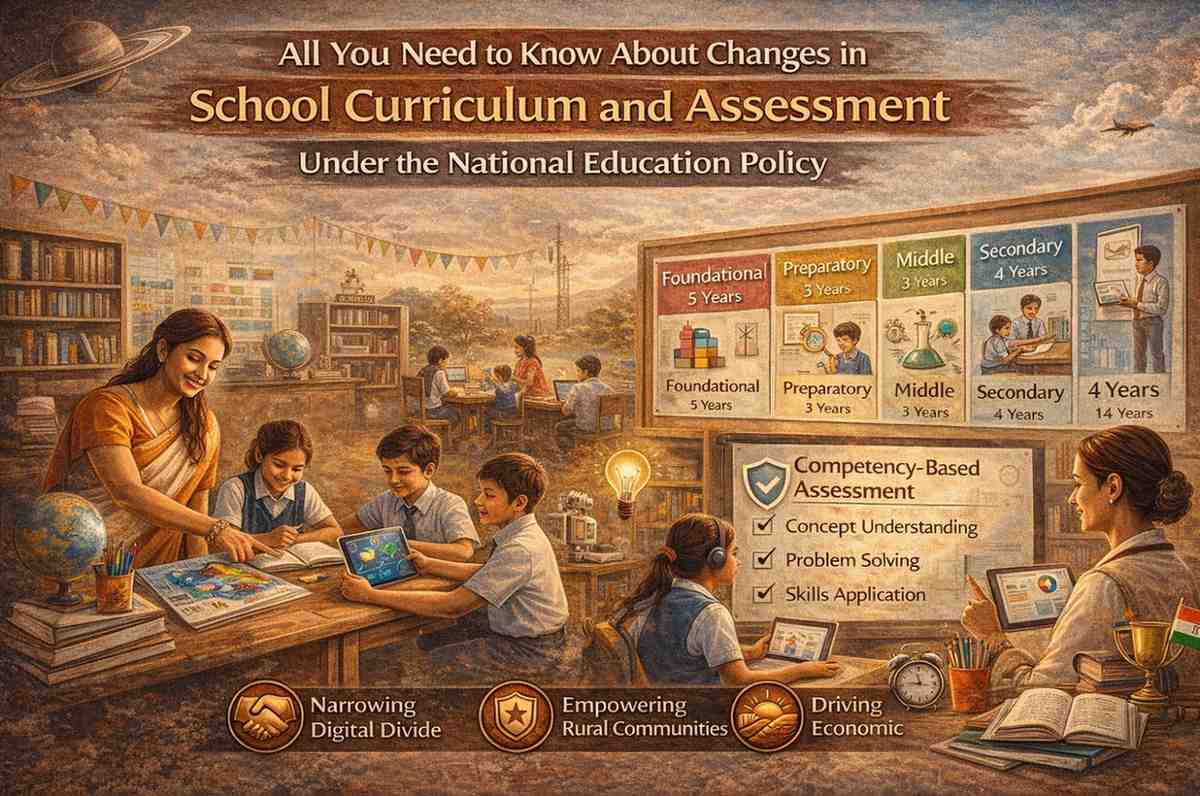
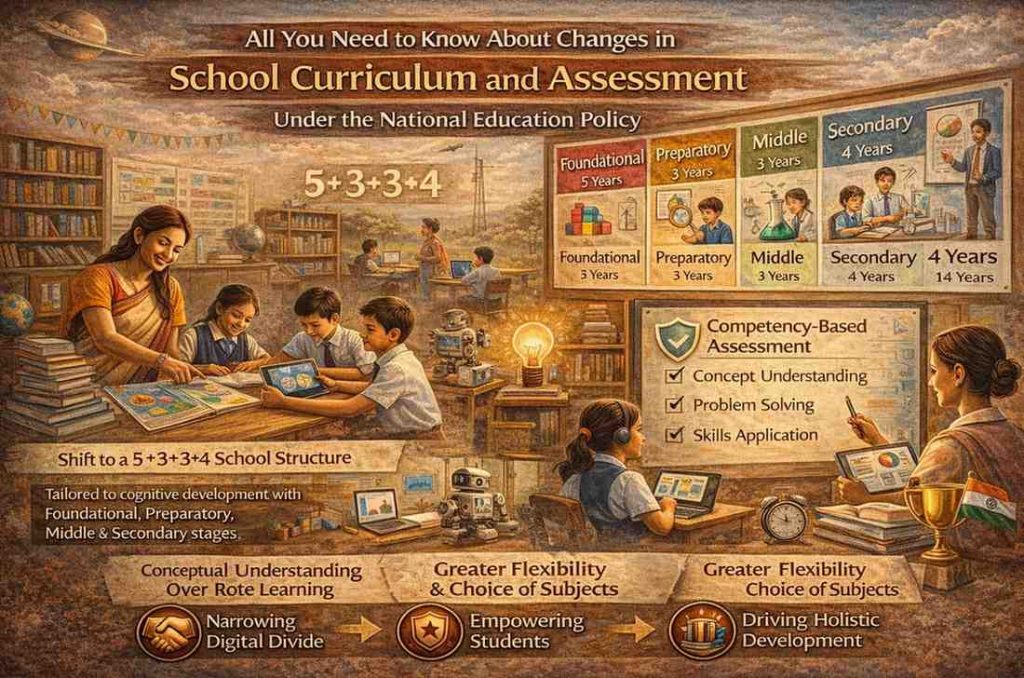
One of the most visible changes under the policy is the restructuring of school education into a new 5+3+3+4 design, replacing the traditional 10+2 system. This structure aligns learning stages with a child’s cognitive development, beginning with foundational years and progressing through preparatory, middle, and secondary stages.
Curriculum design at each stage is tailored to age-appropriate learning goals. Early years focus on play-based and activity-driven learning, while later stages emphasise deeper conceptual understanding, critical thinking, and subject flexibility.
Focus on Conceptual Understanding Over Rote Learning
A central pillar of curriculum reform is the move away from rote memorisation toward understanding concepts and applying knowledge. Textbooks and syllabi are being redesigned to reduce content load while encouraging inquiry, discussion, and problem-solving.
Classroom learning is expected to become more interactive, with greater emphasis on projects, real-life examples, and interdisciplinary connections. This approach aims to make learning more meaningful and engaging, helping students retain knowledge and develop analytical skills.
Greater Flexibility and Choice of Subjects
The new curriculum framework allows students more freedom to choose subjects based on their interests rather than rigid streams. Traditional separations between arts, science, and commerce are being gradually removed, enabling students to combine subjects across disciplines.
This flexibility is intended to recognise diverse talents and aspirations. Students can explore areas such as vocational skills, arts, sports, and technology alongside academic subjects, supporting a more inclusive and personalised learning experience.
Changes in Assessment Philosophy
Assessment under the National Education Policy is being reoriented from high-pressure, summative exams to continuous and formative evaluation. The focus is on assessing learning outcomes, skills, and competencies rather than only textbook knowledge.
Regular classroom-based assessments are designed to provide feedback to both students and teachers, helping identify learning gaps early. This shift aims to reduce exam-related anxiety while promoting steady academic growth.
Introduction of Competency-Based Assessments
Competency-based assessment is a key feature of the new system. Instead of testing memory alone, exams and evaluations are expected to assess students’ ability to apply concepts, analyse information, and solve problems.
Questions may be more application-oriented, encouraging students to think critically and creatively. Over time, this approach is expected to align school education more closely with higher education standards and workplace requirements.
Board Exam Reforms
Board examinations are also set to undergo changes to reduce stress and improve learning outcomes. The policy proposes making board exams more flexible, with options for modular or semester-based assessments and opportunities for improvement.
By offering multiple chances and focusing on core competencies, board exams are expected to become less intimidating while still maintaining academic rigour. The intent is to ensure that exams support learning rather than dominate it.
Role of Teachers in the New Framework
Teachers play a crucial role in implementing curriculum and assessment reforms. The policy emphasises continuous professional development to help educators adapt to new pedagogical approaches and assessment methods.
Training programmes focus on child-centric teaching, use of technology, and formative assessment techniques. Empowered and well-trained teachers are seen as essential to translating policy vision into classroom reality.
Integration of Technology in Learning and Assessment
Digital tools and platforms are increasingly being integrated into curriculum delivery and assessment. Technology supports personalised learning, online resources, and data-driven feedback on student performance.
While digital integration offers new opportunities, the policy also recognises the need to bridge the digital divide and ensure equitable access, particularly for students in rural and underserved areas.
Challenges in Implementation
Despite its ambitious vision, implementing curriculum and assessment reforms poses challenges. Differences in state capacities, teacher preparedness, infrastructure, and resources can affect the pace and quality of change.
Balancing flexibility with standardisation, ensuring consistent assessment practices, and maintaining inclusivity are ongoing concerns. Continuous monitoring and collaboration between schools, boards, and policymakers will be critical to addressing these challenges.
What This Means for Students and Parents
For students, the changes promise a more engaging, less stressful, and more relevant education experience. Learning is expected to become more exploratory, with greater emphasis on understanding and skill development.
Parents may need time to adjust to new assessment styles and grading patterns. Clear communication from schools and education authorities will play a key role in building trust and awareness about the benefits of the new system.
The Road Ahead
The changes in school curriculum and assessment under the National Education Policy represent a long-term shift rather than an overnight transformation. As schools gradually adopt new frameworks, the success of these reforms will depend on effective implementation, teacher support, and continuous feedback.
All you need to know is that the policy marks a decisive move toward a more student-centric, flexible, and future-ready education system. If executed well, these reforms have the potential to redefine school education in India and better equip the next generation for a rapidly changing world.
Also read – https://newsvent.in/how-data-security-and-privacy-concerns-are-reshaping-indias-tech-ecosystem/
Add newsvent.in as preferred source on google – click here
Last Updated on: Thursday, January 22, 2026 12:32 pm by News Vent Team | Published by: News Vent Team on Thursday, January 22, 2026 12:32 pm | News Categories: India
About The Author