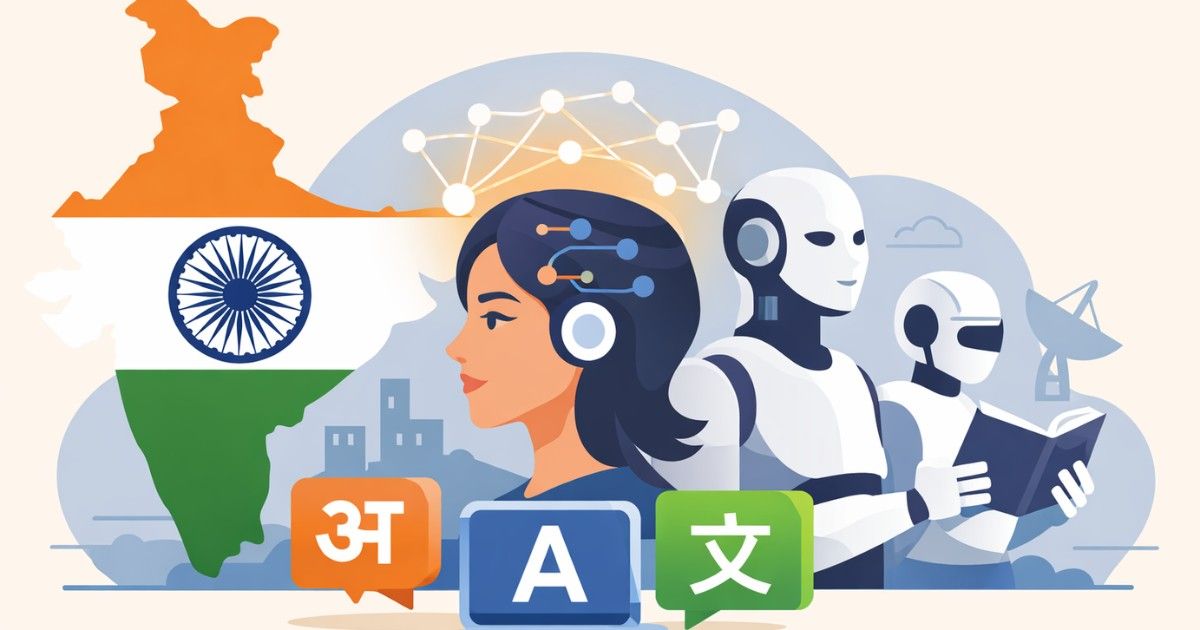
The IndiaAI Avatar AI Project has moved into sharper focus following discussions at the recent AI Impact Summit, with policymakers outlining plans to build multilingual digital personas tailored for Indian users. Anchored under the IndiaAI Mission, the initiative aims to develop culturally aware artificial intelligence systems designed for sectors such as healthcare and agriculture.
By prioritising domestic model development, the IndiaAI Avatar AI Project reflects a broader shift in India’s technology strategy from primarily adopting global AI tools to creating indigenous solutions trained on Indian languages and datasets. Officials have indicated that the effort seeks to strengthen digital inclusion while supporting long-term technological self-reliance.
IndiaAI Avatar AI Project: From Adoption to Indigenous Development
The IndiaAI Avatar AI Project marks a shift in India’s artificial intelligence strategy, moving from reliance on global platforms to building domestic capabilities. Over the past few years, Indian enterprises and government agencies have integrated AI tools developed by international firms. However, policymakers have increasingly stressed the importance of creating systems that reflect India’s linguistic diversity and socio-economic context.
Launched under the IndiaAI Mission, the initiative seeks to support research, computing infrastructure and startup participation in AI development. The avatar-based component is designed to create digital interfaces capable of interacting in multiple Indian languages through speech and text, making the technology accessible to both rural and urban users.
Technology experts point out that language accessibility remains a major barrier to digital inclusion. While English-based AI systems are widely used, a significant portion of India’s population communicates primarily in regional languages.
Use Cases in Healthcare and Agriculture
Officials familiar with the initiative have indicated that the Avatar AI project is designed to support frontline services. In healthcare, digital avatars may assist with preliminary information, appointment guidance and basic awareness on preventive care. In agriculture, the system could provide region-specific advisories on crop cycles, weather updates and government schemes.
Experts caution that such systems are not replacements for trained professionals. Instead, they are positioned as supplementary digital tools aimed at expanding access to reliable information.
India’s scale presents unique technical challenges. Developing AI models that can process dozens of languages, dialects and accents requires extensive data collection and validation. Data privacy safeguards and ethical use standards are also expected to form part of the framework.
Global AI Landscape and Strategic Positioning
The renewed interest in domestic AI capabilities comes amid intensified global competition. Companies such as Anthropic and several Chinese AI developers have been advancing large language models tailored to their respective markets. Governments worldwide are increasingly focusing on AI sovereignty, aiming to reduce reliance on foreign technologies.
Indian policymakers have stated in public forums that strategic autonomy in emerging technologies is a priority. The IndiaAI Mission includes funding support for startups, academic institutions and research labs to build foundational models within the country.
Industry analysts suggest that while global models may continue to dominate certain applications, localised systems could better address India-specific needs, especially in governance and public service delivery.
Infrastructure and Policy Support
The IndiaAI Mission also emphasises computing infrastructure, including access to high-performance processors and cloud platforms. Developing large-scale models requires significant processing power and coordinated research efforts.
Officials have previously indicated that partnerships between government bodies, academic institutions and private firms will be key to execution. Clear regulatory guidelines are expected to guide responsible AI development, including transparency and bias mitigation.
Building Culturally Aware AI
The Avatar AI initiative signals a broader shift in India’s approach to artificial intelligence. Rather than remaining primarily a consumer of global AI platforms, India is seeking to shape tools aligned with its demographic and linguistic context.
Observers note that the success of the project will depend on sustained funding, research collaboration and careful implementation. For now, the surge in interest following the AI Impact Summit reflects growing awareness that artificial intelligence is not only a technological issue but also a strategic and developmental priority for the country.
As the IndiaAI Mission progresses, attention will remain on how effectively the Avatar AI project translates policy vision into accessible, multilingual digital services for citizens across sectors.
Also read: UPI Surpasses Cash in India: Digital Payments Now Lead with 57% of Transactions
Add News Vent as a preferred source on Google – Click Here
Last Updated on: Tuesday, February 24, 2026 3:31 pm by News Vent Team | Published by: News Vent Team on Tuesday, February 24, 2026 3:31 pm | News Categories: Technology
About The Author