
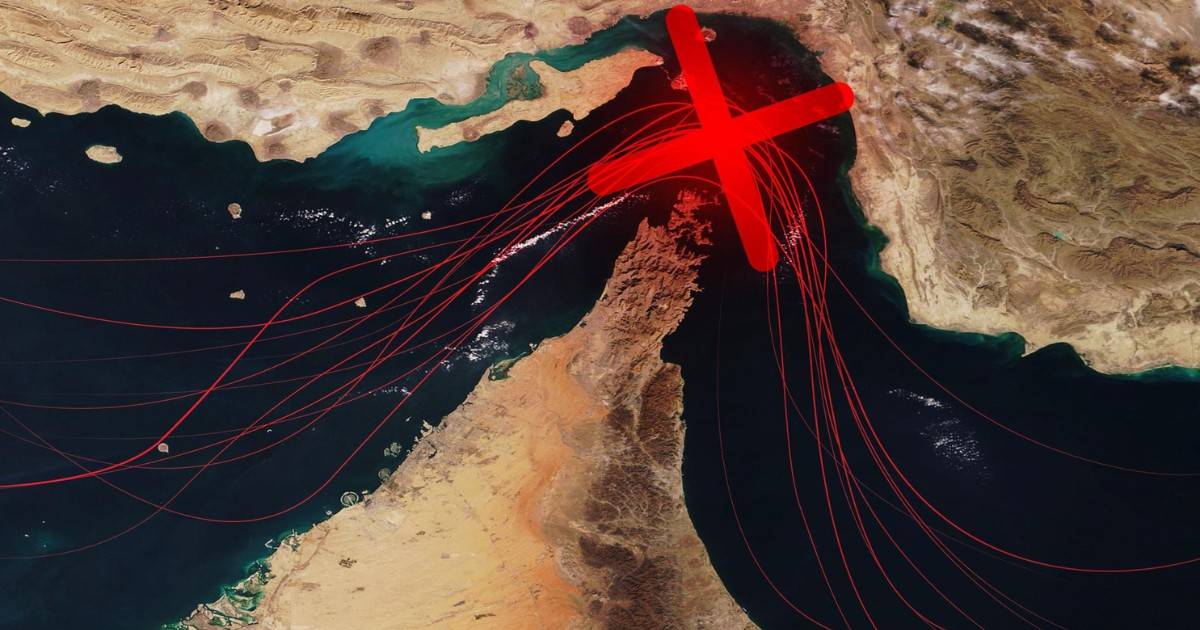
Strait of Hormuz traffic collapse: Shipping activity through the Strait of Hormuz has reportedly dropped by 95–99% amid rising security threats and attacks in the region, raising serious concerns about global energy supply chains and maritime trade. The sharp decline in vessel movement highlights the growing impact of geopolitical tensions on one of the world’s most critical oil transit routes.
The Strait of Hormuz traffic collapse is being closely monitored by global markets, as the narrow waterway plays a crucial role in transporting crude oil and liquefied natural gas from the Middle East to international markets. A significant portion of the world’s oil supply passes through this strategic route, making any disruption a major concern for energy markets.
Importance of the Strait of Hormuz
The Strait of Hormuz is one of the most vital maritime chokepoints in the world, connecting the Persian Gulf with the Gulf of Oman and the Arabian Sea. Countries such as Saudi Arabia, Iraq, United Arab Emirates, and Kuwait rely heavily on this route to export oil to global markets.
The Strait of Hormuz traffic collapse therefore has significant implications not only for regional economies but also for global energy supply and pricing. Any disruption in this corridor can lead to volatility in oil prices and affect supply chains worldwide.
Rising attacks disrupt shipping activity
The sharp decline in shipping traffic is largely attributed to increasing security risks and reported attacks targeting vessels operating in the region. Maritime operators have become increasingly cautious, with many shipping companies either delaying transit or rerouting vessels to avoid potential threats.
Industry experts note that heightened tensions in the region have led to increased insurance costs and operational risks for shipping companies. As a result, many operators are choosing to reduce or suspend operations through the affected route.
The Strait of Hormuz traffic collapse underscores how security challenges can rapidly impact global trade routes and disrupt critical supply chains.
Impact on global energy markets
The disruption in shipping activity through the Strait of Hormuz has raised concerns among energy analysts regarding potential supply shortages and price fluctuations in global oil markets.
Since a substantial share of the world’s oil passes through this route, even temporary disruptions can influence global energy prices. Traders and market participants closely monitor developments in the region, as any escalation in tensions could further impact supply flows.
The Strait of Hormuz traffic collapse has therefore become a key factor influencing sentiment in global commodity markets, particularly in the oil and gas sector.
Maritime security concerns
The situation has also highlighted the importance of maritime security in ensuring the safe movement of goods across international waters. Governments and international organizations are expected to assess security measures and consider strategies to safeguard shipping routes.
Increased naval presence and coordinated security efforts may be required to restore confidence among shipping operators and stabilize traffic through the region.
Outlook
The Strait of Hormuz traffic collapse remains a critical development in global trade and energy markets. Market participants and governments will continue to monitor the situation closely as efforts are made to address security concerns and restore normal shipping activity.
Also read: Intellect Design Arena Fintel PLC Partnership to Form Joint Venture
Add News Vent as a preferred source on Google – Click Here
Last Updated on: Wednesday, March 18, 2026 2:06 pm by Koushik Velpuri | Published by: Koushik Velpuri on Wednesday, March 18, 2026 2:06 pm | News Categories: Trending
About The Author