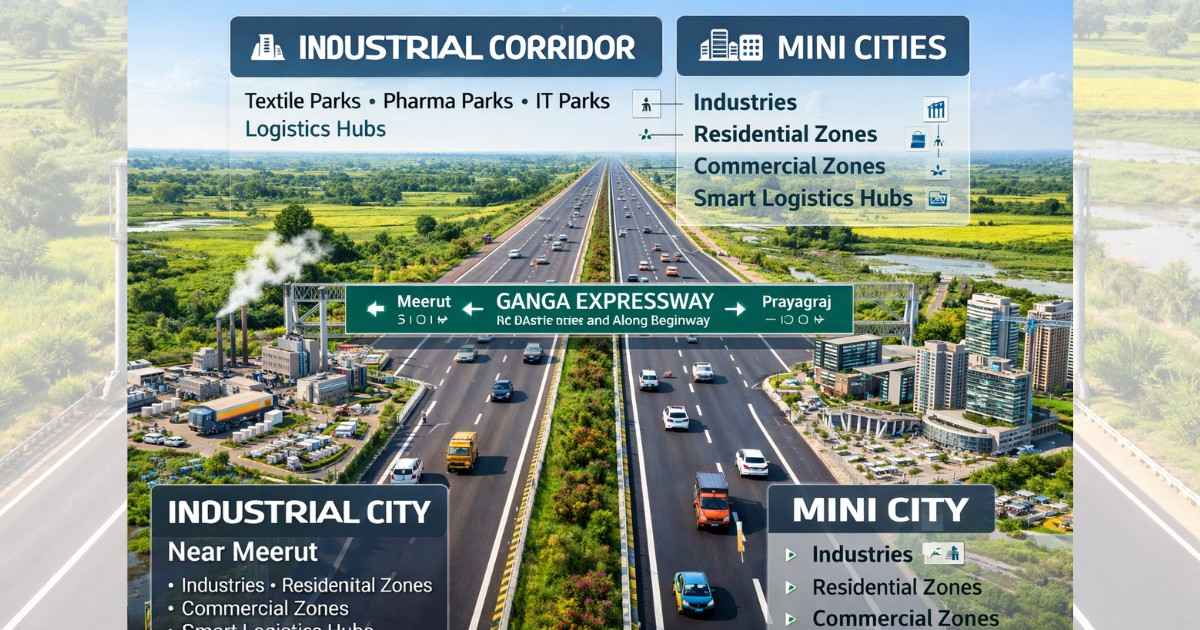
The Ganga Expressway development has received a major push after the Uttar Pradesh government approved plans to build “mini-cities” along the 594-km corridor. The decision, taken under the leadership of Yogi Adityanath, aims to transform areas along the expressway into modern urban hubs.
The project is expected to integrate residential, commercial, and transport infrastructure, making it one of the most ambitious corridor-based development initiatives in the state.
Key Highlights of the Plan
- Development of mini-cities along the Ganga Expressway
- Construction of high-rise apartments and housing clusters
- Commercial spaces including shopping malls and business zones
- Dedicated cycle tracks and modern road infrastructure
- Focus on planned urbanisation and connectivity
The initiative is designed to create self-sustained urban centres along the expressway route.
What Are These ‘Mini-Cities’?
The proposed mini-cities are planned urban zones that will combine residential, commercial, and recreational facilities. These will include:
- Multi-storey residential buildings
- Retail and entertainment hubs
- Green spaces and cycling infrastructure
- Improved road and transport connectivity
The aim is to reduce pressure on existing cities by creating new growth centres along the corridor.
Official Vision Behind the Project
The Uttar Pradesh government has positioned this move as part of a broader strategy to promote regional development and economic growth. By developing infrastructure along the expressway, authorities aim to attract investment, generate employment, and improve living standards.
Officials have indicated that the project will be implemented in phases, with detailed planning and land allocation to follow.
Context: Importance of the Ganga Expressway
The Ganga Expressway is one of India’s longest expressways, spanning approximately 594 km and connecting key regions of Uttar Pradesh. It is expected to significantly reduce travel time and improve logistics efficiency.
Large infrastructure projects like this often act as catalysts for economic activity, encouraging industrial and urban development along their routes.
Impact on Real Estate and Economy
The approval of mini-cities is likely to have a significant impact on the real estate sector. Areas along the expressway could see increased demand for housing and commercial properties.
Potential benefits include:
- Growth in property values
- Increased investment opportunities
- Job creation in construction and services
- Improved infrastructure in semi-urban areas
The project could also boost local economies by attracting businesses and industries.
Public Impact: What It Means for Residents
For residents, the development of mini-cities could offer:
- Access to modern housing and amenities
- Better connectivity to major cities
- Improved quality of life with planned infrastructure
- New employment opportunities
The inclusion of cycle tracks and green spaces also indicates a focus on sustainable urban planning.
Challenges and Considerations
While the project presents significant opportunities, it also raises important considerations:
- Land acquisition and rehabilitation
- Environmental impact along the corridor
- Implementation timelines and costs
Experts note that careful planning and execution will be essential to ensure balanced and sustainable development.
The Ganga Expressway development plan to build mini-cities marks a major step toward transforming infrastructure-led growth in Uttar Pradesh. By combining connectivity with urban planning, the initiative aims to create new economic hubs along the corridor.
As the project moves forward, its success will depend on effective implementation and the ability to balance development with sustainability.
Add News Vent as a preferred source on Google – Click Here
Last Updated on: Thursday, March 26, 2026 12:05 pm by Koushik Velpuri | Published by: Koushik Velpuri on Thursday, March 26, 2026 12:05 pm | News Categories: India, Business
About The Author