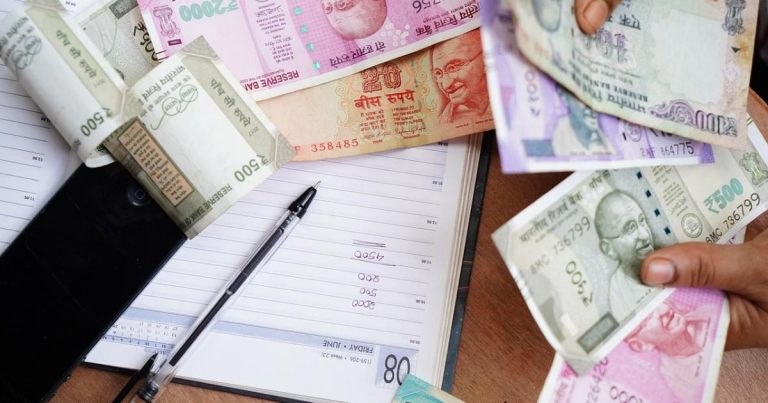
Mumbai: The Reserve Bank of India (RBI) has announced the opening of a special swap window for Foreign Currency Non-Resident (Bank) [FCNR(B)] deposits, a move aimed at attracting foreign-currency inflows, boosting banking system liquidity, and strengthening the country’s foreign exchange reserves amid evolving global economic conditions.
The measure forms part of a broader package of initiatives unveiled by the central bank to enhance external sector stability and ensure adequate foreign currency availability in the financial system.
Market participants view the decision as a proactive step by the RBI to bolster India’s reserve position while encouraging overseas Indians to channel more deposits into the domestic banking network.
What Is the FCNR(B) Swap Window?
The FCNR(B) scheme allows Non-Resident Indians (NRIs) to maintain fixed deposits in designated foreign currencies with Indian banks. These deposits help banks mobilize foreign-currency resources without exposing depositors to exchange-rate risks.
Under the newly announced swap facility, banks can raise FCNR(B) deposits from overseas investors and swap the foreign currency with the RBI at a predetermined rate.
This mechanism helps banks manage currency risks more efficiently while encouraging them to attract additional foreign-currency deposits.
Why the RBI Introduced the Measure
The decision comes at a time when global financial markets are witnessing heightened volatility due to geopolitical tensions, fluctuating commodity prices, and uncertainty surrounding interest-rate trajectories in major economies.
Although India’s foreign exchange reserves remain among the largest in the world, policymakers continue to prioritize strengthening external buffers to safeguard the economy against potential global shocks.
By opening the FCNR(B) swap window, the RBI aims to encourage greater inflows of foreign currency into the banking system, thereby enhancing reserve adequacy and supporting overall financial stability.
Potential Benefits for the Economy
The new swap facility could provide multiple benefits to India’s financial system and broader economy.
First, increased foreign-currency deposits can strengthen the country’s reserve position, improving its ability to manage external obligations and withstand periods of global market stress.
Second, the measure may help support the Indian rupee by improving foreign currency availability within the domestic financial system. Strong reserves often contribute to investor confidence and can help reduce excessive currency volatility.
Third, banks may gain access to additional funding sources that can support lending activities and liquidity management.
Lessons from the 2013 FCNR(B) Initiative
The latest announcement has drawn comparisons with a similar FCNR(B) swap scheme introduced in 2013 during a period of significant currency volatility. At that time, the RBI’s initiative successfully attracted billions of dollars in foreign-currency deposits and played a key role in stabilizing the rupee and strengthening reserves.
While the current economic environment differs considerably from the conditions that prevailed more than a decade ago, the success of the earlier program demonstrates the effectiveness of such measures in mobilizing foreign capital.
Key Insights:
- The Reserve Bank of India has introduced a new FCNR(B) swap scheme to boost dollar inflows into the country.
- The scheme allows banks to mobilise foreign currency deposits from Non-Resident Indians (NRIs) and swap them with the RBI at attractive rates.
- The primary objective is to strengthen India’s foreign exchange reserves and support the rupee amid global volatility.
- By offering favourable swap terms, the RBI aims to incentivise banks to attract more FCNR(B) deposits, increasing liquidity in foreign currency.
- The move is expected to help stabilise currency markets and manage external sector pressures.
- Similar schemes in the past have proven effective in boosting forex inflows during periods of stress.
- Market participants view this as a proactive step by the RBI to enhance financial stability and investor confidence.
Image credits: X/ReserveBankOfIndia
Also read: Tally Solutions Invests in OTU India to Strengthen Workforce Management Solutions for MSMEs
Add News Vent as a preferred source on Google – Click Here
Last Updated on: Tuesday, June 9, 2026 3:46 pm by Koushik Velpuri | Published by: Koushik Velpuri on Tuesday, June 9, 2026 3:46 pm | News Categories: Business
About The Author