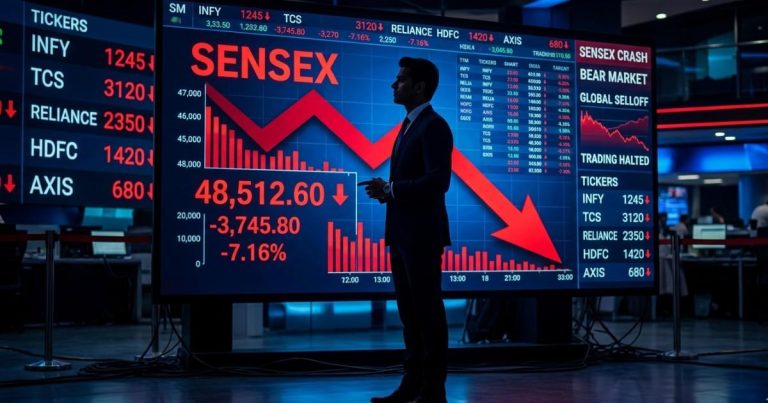
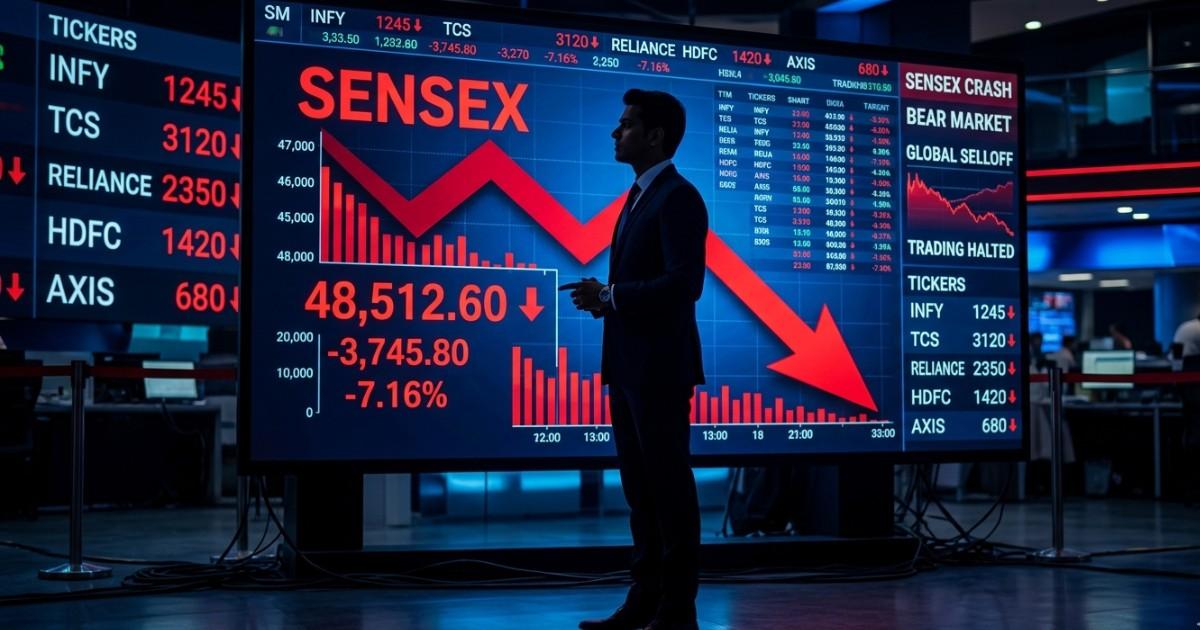
Indian stock markets opened sharply lower on April 2, with the BSE Sensex falling over 1,000 points and the Nifty 50 slipping below key levels, as rising geopolitical tensions rattled global sentiment.
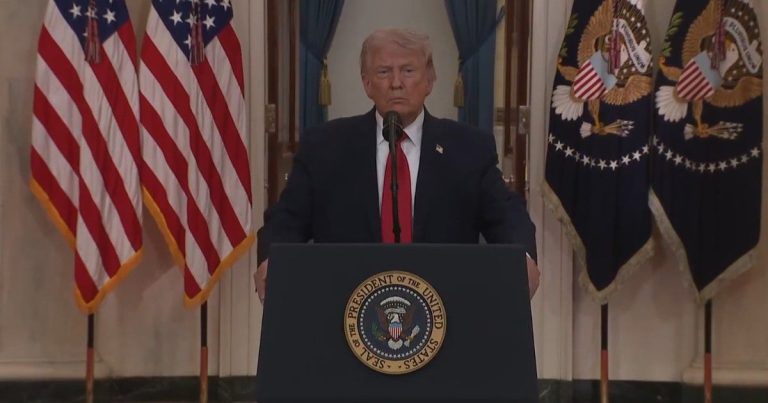
The sell-off followed fresh remarks by Donald Trump indicating continued US military action against Iran, dampening hopes of a quick resolution to the conflict.
Market Opening: Broad-Based Selling
- Sensex dropped over 1,000–1,400 points in early trade
- Nifty fell nearly 2%, slipping below 22,300
- Midcap and smallcap indices declined over 2–3%
All sectoral indices opened in the red, reflecting widespread selling pressure across the market.
What Triggered the Market Crash
1. Trump’s Iran Threat Shakes Confidence
Markets reacted negatively after Trump signalled continued attacks on Iran, including energy targets, without a clear timeline for de-escalation.
This led to:
- Increased geopolitical uncertainty
- Shift towards safe-haven assets
- Global “risk-off” sentiment
2. Oil Prices Surge Above $105
Crude oil prices jumped sharply, rising over $105–$106 per barrel, intensifying fears for oil-importing economies like India.
Impact:
- Higher inflation expectations
- Pressure on corporate margins
- Negative outlook for sectors like aviation and logistics
3. Global Markets Turn Weak
Asian and global equities declined after the escalation in tensions, dragging Indian markets lower.
- Broad global sell-off
- Increased volatility across asset classes
- Investors shifting away from equities
4. Banking & Pharma Stocks Lead Losses
Major sectors saw heavy selling:
- Banking stocks dropped around 2–2.5%
- Pharma stocks fell up to 3–4%
- Realty and healthcare also declined sharply
5. Investor Wealth Erodes Sharply
Within hours of trading:
- Over ₹9–11 lakh crore market value wiped out
- Massive selling across large-cap stocks
Sectoral Snapshot
- Banking & Financials: Biggest losers
- Pharma: Hit by global concerns
- Auto & Realty: Declined sharply
- IT: Showed limited resilience
Why This Matters
Link Between War and Markets
The current fall highlights how geopolitical tensions directly impact financial markets, especially:
- Oil-dependent economies like India
- Inflation-sensitive sectors
- Global investor sentiment
Risk-Off Mode Explained
Investors are currently:
- Selling equities
- Moving to cash, dollar, or bonds
- Avoiding high-risk assets
This “risk-off” behaviour typically leads to sharp market corrections.
What to Watch Next
- Further statements from the US on Iran
- Movement in crude oil prices
- Global market trends
- RBI and government response
Markets are expected to remain highly volatile in the near term.
The sharp fall in the Sensex and Nifty underscores the fragile nature of global markets amid geopolitical uncertainty. Trump’s latest Iran stance, combined with rising oil prices and weak global cues, has triggered a strong sell-off in Indian equities.
While short-term volatility may persist, the market’s direction will largely depend on how the geopolitical situation evolves in the coming days.
Also read: India’s Defence Exports Hit Record ₹38,424 Crore in FY 2025–26, Government Highlights Growth
Add News Vent as a preferred source on Google – Click Here
Edited by – Koushik VVS
Last Updated on: Thursday, April 2, 2026 1:21 pm by Koushik Velpuri | Published by: Koushik Velpuri on Thursday, April 2, 2026 1:18 pm | News Categories: Business
About The Author