As tensions rise sharply in West Asia following reported escalations involving the United States, Israel and Iran, India has stepped up diplomatic outreach at the highest level. The “PM Modi Middle East Crisis Statement” has emerged as a key search trend, reflecting public interest in how New Delhi is responding to a rapidly evolving geopolitical situation.
According to official statements from the Prime Minister’s Office, Prime Minister Narendra Modi held separate high-level conversations this week with King Abdullah II of Jordan and Mohammed bin Salman, Crown Prince of Saudi Arabia. The discussions focused on regional stability, ongoing hostilities, and the safety of civilians, including the large Indian diaspora living and working across the Gulf region.
India Calls for Restraint and Dialogue
In official readouts, India reiterated its long-standing position that dialogue and diplomacy remain the only viable path to reduce tensions. New Delhi has consistently advocated de-escalation in West Asia, a region critical to India’s energy security, trade flows, and expatriate community.
Government sources indicated that the Prime Minister conveyed concern over the deteriorating security environment and stressed the need to avoid further escalation. While India maintains strong bilateral ties with multiple countries in the region, it has avoided taking sides, instead emphasising stability and peaceful resolution.
The Ministry of External Affairs has also been closely monitoring developments. Officials stated that India is in touch with its missions in affected countries to ensure that Indian nationals receive timely updates and assistance if required.
Strategic Importance of Gulf Outreach
The outreach to Jordan and Saudi Arabia carries strategic weight. Both countries play influential roles in regional diplomacy and maintain channels of communication across rival blocs.
Saudi Arabia is one of India’s largest energy suppliers and a key strategic partner under the India–Saudi Strategic Partnership Council framework. Jordan, while smaller in economic scale, holds geopolitical importance and maintains diplomatic engagement across the region.
Analysts note that maintaining close communication with Gulf leadership is essential during crises. India has over eight million citizens living and working in West Asia. Remittances from the region contribute significantly to India’s foreign exchange inflows.
In times of instability, ensuring the safety of the diaspora becomes a priority. The government has in past crises undertaken evacuation operations when necessary. At present, officials have not announced any evacuation plan but have stated that contingency measures are in place if required.
Impact of Iran Conflict on India
The “Impact of Iran Conflict on India” is another widely searched query, reflecting concerns about broader economic implications. Iran occupies a strategic position in global energy markets and regional security dynamics. Any disruption in the Strait of Hormuz, a key oil transit route, could affect global crude supply chains.
India imports a substantial portion of its crude oil from the Gulf region. A sustained spike in oil prices could increase import costs, widen the trade deficit, and put pressure on domestic fuel prices. However, officials have not indicated any immediate supply disruption at this stage.
Beyond energy, heightened tensions can influence shipping routes, insurance premiums, and commodity markets. Financial markets typically respond to geopolitical risk with volatility, especially in oil and gold prices.
Balanced Diplomacy in a Volatile Region
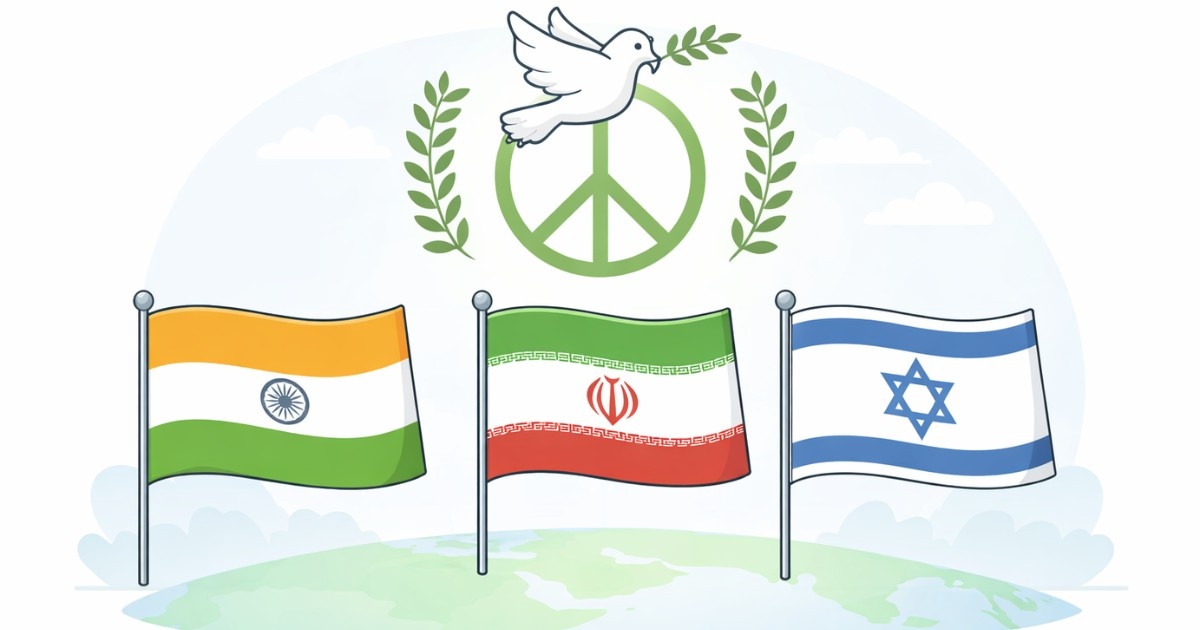
India’s foreign policy in West Asia has evolved over the past decade, with deeper engagement across multiple partners including Israel, Iran, Saudi Arabia, and the United Arab Emirates. Maintaining balanced ties allows New Delhi to preserve strategic autonomy while protecting national interests.
Observers describe the current diplomatic engagement as consistent with India’s approach of “multi-alignment,” where it engages constructively with diverse stakeholders without aligning exclusively with any bloc.
As the situation remains fluid, further diplomatic engagement is expected. The government has not issued any advisory beyond routine caution for Indian nationals in sensitive areas, but officials continue to assess developments in coordination with partner countries.
With geopolitical tensions dominating global headlines, India’s emphasis on de-escalation and dialogue underscores its attempt to safeguard economic interests, energy security, and the well-being of its citizens abroad during a volatile week in West Asia.
Also read: Stock Market Holiday Today: 5 Key Things to Watch as Gold Prices Climb
Add News Vent as a preferred source on Google – Click Here
Edited by – VVS Koushik
Last Updated on: Tuesday, March 3, 2026 2:49 pm by News Vent Team | Published by: News Vent Team on Tuesday, March 3, 2026 2:49 pm | News Categories: Politics
About The Author