
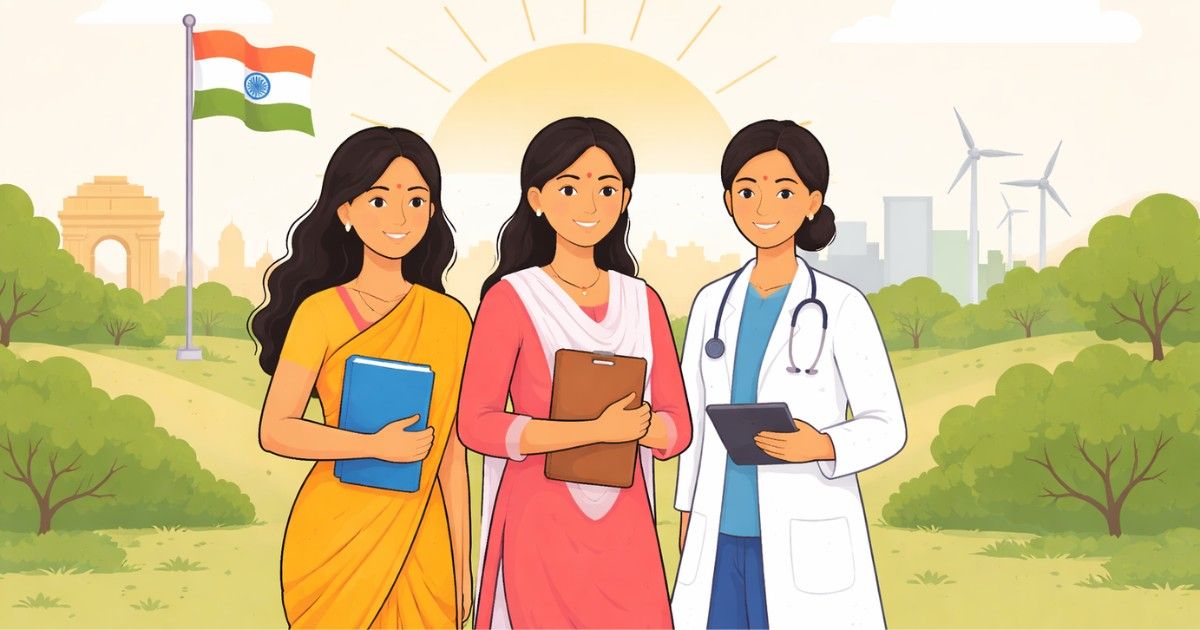
India’s vision of becoming a developed nation by 2047 often referred to as Vikasit Bharat is increasingly being linked with the role of women in shaping economic growth, governance, and social transformation. Policymakers, economists, and social leaders have emphasized that women’s participation in education, entrepreneurship, and public life will play a decisive role in achieving India’s long-term development goals.
Over the past decade, several government initiatives have focused on empowering women through financial inclusion, healthcare access, and skill development. These efforts reflect a broader recognition that sustainable development cannot be achieved without strong female participation across sectors.
Women at the Center of Economic Growth
India’s economic growth story is closely tied to expanding opportunities for women in the workforce. According to policy experts, improving female labor force participation could significantly boost the country’s economic output in the coming decades.
Government initiatives such as Beti Bachao Beti Padhao have focused on improving access to education for girls, while financial inclusion programs have enabled millions of women to open bank accounts and participate in formal financial systems.
Similarly, entrepreneurship initiatives like Pradhan Mantri Mudra Yojana have helped women start small businesses, contributing to job creation and local economic development.
Experts believe that expanding women-led enterprises and increasing female participation in high-growth industries such as technology, healthcare, and finance could accelerate India’s path toward becoming a developed economy.
Social Transformation and Leadership
Beyond economic contributions, women are playing an increasingly visible role in leadership and governance. From grassroots institutions to national policymaking, women’s representation has steadily grown.
Local governance systems, including Panchayati Raj Institutions, have reserved seats for women, encouraging greater participation in decision-making processes at the village level. This shift has strengthened community leadership and improved outcomes in areas such as education, sanitation, and healthcare.
Across urban sectors as well, women leaders are emerging in corporate management, technology innovation, and social entrepreneurship, reflecting changing social attitudes and expanding opportunities.
Cultural Strength and Historical Roots
India’s emphasis on the role of women in development is also deeply connected to its cultural traditions. Throughout history, women have played vital roles in shaping social and intellectual movements across the subcontinent.
Modern development strategies increasingly highlight the importance of balancing economic progress with social values that support equality and inclusion. Advocates of this approach argue that India’s cultural respect for feminine energy and leadership can serve as a powerful foundation for inclusive development.
By integrating women’s empowerment with national development strategies, policymakers aim to create a model of growth that combines economic expansion with social progress.
Challenges That Remain
Despite progress, several challenges remain in achieving gender equality in economic and social participation. Experts point to issues such as workforce participation gaps, unequal access to resources, and persistent social barriers in certain regions.
Addressing these challenges will require coordinated efforts across education systems, policy frameworks, and private sector initiatives. Investments in digital literacy, healthcare infrastructure, and workplace opportunities are expected to play a key role in supporting women’s advancement.
Looking Ahead
As India continues its journey toward becoming a developed nation by 2047, many analysts believe that empowering women will remain central to the country’s development strategy. Expanding opportunities in education, entrepreneurship, and leadership could unlock significant economic and social potential.
The idea of Vikasit Bharat therefore represents not only economic progress but also a broader transformation in how the country harnesses the talents and contributions of its citizens. With women increasingly at the forefront of innovation, governance, and community development, India’s path toward a stronger and more inclusive future may well be shaped by its feminine core.
Also read: RBI Interest Rate Decision Today: How RBI Policy Could Impact Stock Markets, EMIs, and Borrowers
Add News Vent as a preferred source on Google – Click Here
Edited by – VVS Koushik
Last Updated on: Saturday, March 7, 2026 2:59 pm by Koushik Velpuri | Published by: Koushik Velpuri on Saturday, March 7, 2026 2:59 pm | News Categories: Politics
About The Author