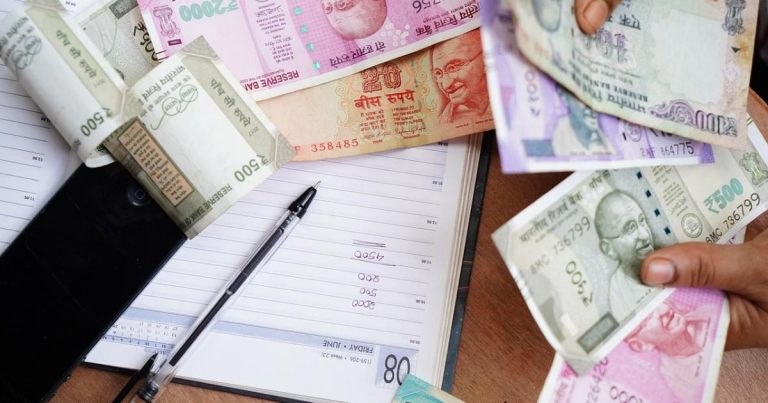

The Indian rupee has fallen to a record low of 96.25 against the U.S. dollar, reflecting mounting pressure from global market uncertainty, elevated crude oil prices, strong dollar demand, and broader risk-off sentiment in international financial markets. The sharp currency move has renewed attention on inflation risks, import costs, and macroeconomic stability.
The decline marks a significant development for India’s financial markets, given the economy’s sensitivity to imported commodities and global capital flows.
Why the Rupee Is Falling
Several major factors may be contributing to the currency weakness:
- Strong U.S. dollar demand globally
- Elevated crude oil prices increasing import pressure
- Foreign institutional investor outflows
- Global geopolitical uncertainty
- Risk aversion across emerging markets
- Higher global interest rate sensitivity
Emerging market currencies often come under pressure when global investors move toward safer dollar assets.
Why a Weaker Rupee Matters
Currency depreciation can have wide-ranging economic consequences.
Potential impacts include:
- Higher import costs
- Fuel price pressure
- Inflationary risks
- Increased costs for overseas education and travel
- Pressure on trade-sensitive sectors
- External financing sensitivity
Import-Dependent Sectors May Face Immediate Cost Pressure
A weaker rupee can quickly increase cost burdens for sectors heavily dependent on imported goods, raw materials, technology components, and energy supplies. Industries such as aviation, electronics, pharmaceuticals, manufacturing, and oil marketing may closely monitor currency movement, as sustained depreciation can affect operating margins and pricing decisions. Companies with foreign currency liabilities may also face additional financial pressure if exchange rate volatility continues.
Inflation Risks Could Move Higher
Currency weakness often raises inflation concerns because imported commodities become more expensive in domestic terms. For India, this is particularly relevant in energy markets, where higher crude oil import costs can influence transportation expenses, fuel pricing, and broader supply chain economics. Any sustained pressure on imported inputs may gradually affect consumer prices across multiple sectors.
RBI and Market Response Will Be Closely Watched
Financial markets are likely to monitor whether the Reserve Bank of India signals any intervention or policy response if volatility intensifies. Central bank communication often plays an important role in managing currency expectations, stabilising sentiment, and reducing speculative pressure during periods of sharp movement.
Global Macro Conditions Remain a Major Driver
The rupee’s direction will also continue to depend heavily on external factors including U.S. monetary policy expectations, global risk appetite, foreign institutional investor flows, commodity prices, and geopolitical developments that influence emerging market currencies more broadly.
Crude Oil Sensitivity Adds Pressure
India’s dependence on imported crude makes the rupee especially vulnerable when oil prices rise sharply. A weaker currency can make already expensive energy imports even costlier, increasing macroeconomic pressure.
Impact on Consumers and Businesses
Businesses dependent on imported raw materials, foreign payments, or energy-intensive operations may face cost pressure.
Consumers may feel indirect effects through inflation-linked price increases.
Exporters May See Mixed Impact
A weaker rupee can improve competitiveness for some export-oriented sectors by making Indian goods cheaper in global markets.
Currency markets are likely to remain highly sensitive to global macroeconomic developments, crude oil movement, foreign investor activity, and any policy signals from monetary authorities.
Key Insights
- The Indian rupee has weakened to a record low of 96.25 against the U.S. dollar, reflecting sustained pressure in global currency markets.
- External factors, including global economic conditions and dollar strength, are driving the depreciation, underscoring India’s exposure to international financial trends.
- The decline raises concerns for import costs, particularly for commodities like crude oil, which could add to inflationary pressures domestically.
- Currency weakness may have mixed economic effects, potentially supporting exports while increasing the burden on businesses reliant on imports.
- Market participants are closely watching policy responses, including potential interventions or measures to stabilize the currency.
- The movement highlights broader volatility in emerging market currencies, amid shifting global capital flows and macroeconomic uncertainty.
Image source: Unsplash
Also read: Tata Trusts Examining Ex-Parte Order as Complaint by Venu Srinivasan Comes to Light
Add News Vent as a preferred source on Google – Click Here
Last Updated on: Monday, May 18, 2026 10:45 am by Koushik Velpuri | Published by: Koushik Velpuri on Monday, May 18, 2026 10:45 am | News Categories: Business
About The Author