
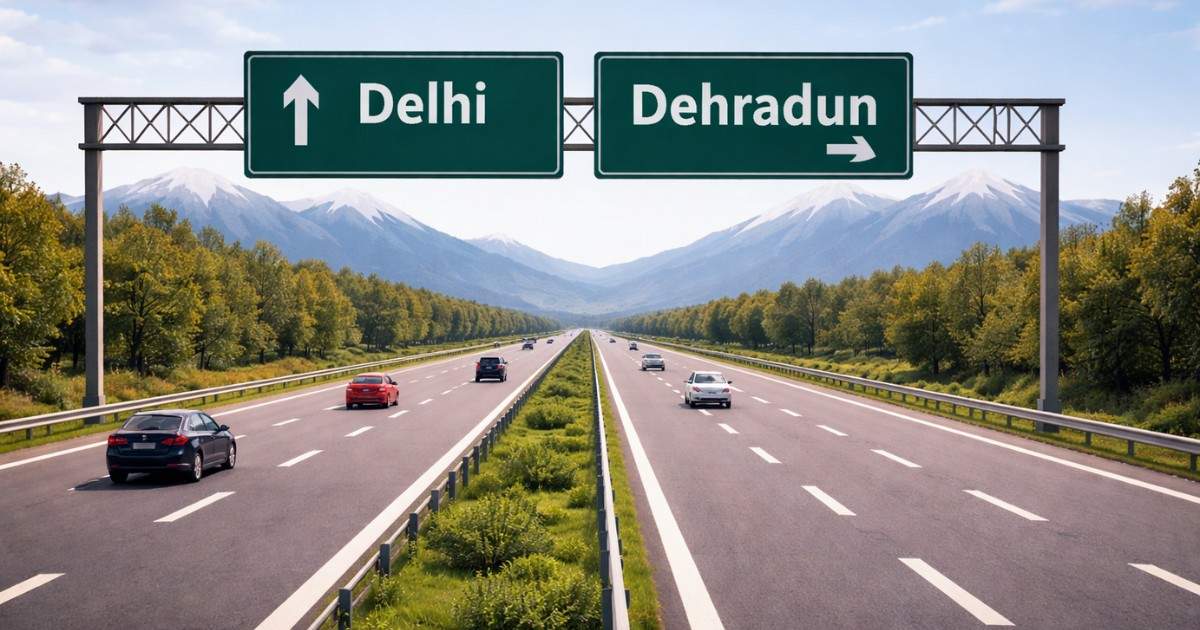
The much-awaited Delhi–Dehradun Expressway has been opened, providing a major boost to connectivity between Delhi and Dehradun. The project is expected to reduce travel time drastically while easing congestion on existing routes.
Route and Map Overview
The expressway spans approximately 210 km, connecting Delhi to Dehradun via key towns in Uttar Pradesh and Uttarakhand.
Key route alignment:
- Delhi
- Baghpat
- Shamli
- Saharanpur
- Dehradun
The route also includes an elevated wildlife corridor through the Rajaji National Park region, ensuring minimal environmental disruption.
Entry and Exit Points
The expressway is designed with multiple entry and exit points for smooth access:
- Delhi entry: Akshardham / DND / Eastern Peripheral Expressway connectivity
- UP access points: Baghpat, Shamli, Saharanpur
- Uttarakhand entry: Near Dehradun outskirts
These points allow travellers to join or exit the expressway conveniently without entering congested city roads.
Travel Time Reduction
One of the biggest advantages of the new expressway is the reduced travel duration:
- Earlier travel time: 6–7 hours
- New travel time: 2.5 to 3 hours
This makes weekend travel and business trips significantly faster and more efficient.
Toll Charges (Expected)
While final toll rates may vary, estimates suggest:
- ₹1,000–₹1,500 for the full stretch (approx.)
- Charges based on vehicle type and distance travelled
Electronic toll collection systems (FASTag) will be used for seamless travel.
Key Features of the Expressway
- Access-controlled, high-speed corridor
- Multiple lanes with future expansion provisions
- Wildlife crossings and eco-sensitive design
- Smart traffic management systems
The expressway is designed to support higher speeds while maintaining safety and sustainability.
Public Impact: Why It Matters
- Boosts tourism to Dehradun, Mussoorie, and nearby hill stations
- Improves logistics and trade connectivity
- Reduces traffic congestion on existing highways
- Enhances regional economic development
The project is expected to benefit both commuters and businesses.
What to Expect Next
Authorities may operationalise additional stretches and fine-tune toll systems in the coming months. Further connectivity improvements to nearby towns are also expected.
Conclusion
The Delhi–Dehradun Expressway marks a significant upgrade in North India’s road infrastructure. By cutting travel time and improving connectivity, it is set to transform travel between Delhi and Dehradun, making journeys faster, safer, and more efficient.
Also read: CBSE Class 10 Results 2026: What the two-exam system means for your marks and scores
Add News Vent as a preferred source on Google – Click Here
Last Updated on: Tuesday, April 14, 2026 2:56 pm by Koushik Velpuri | Published by: Koushik Velpuri on Tuesday, April 14, 2026 2:56 pm | News Categories: News, India
About The Author