
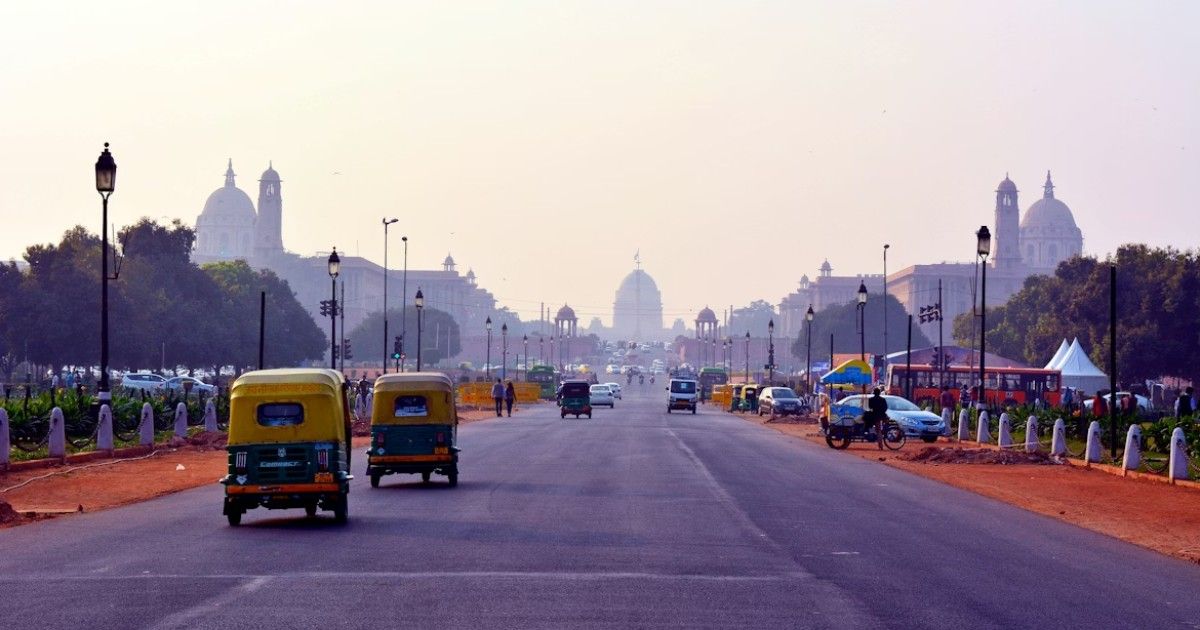
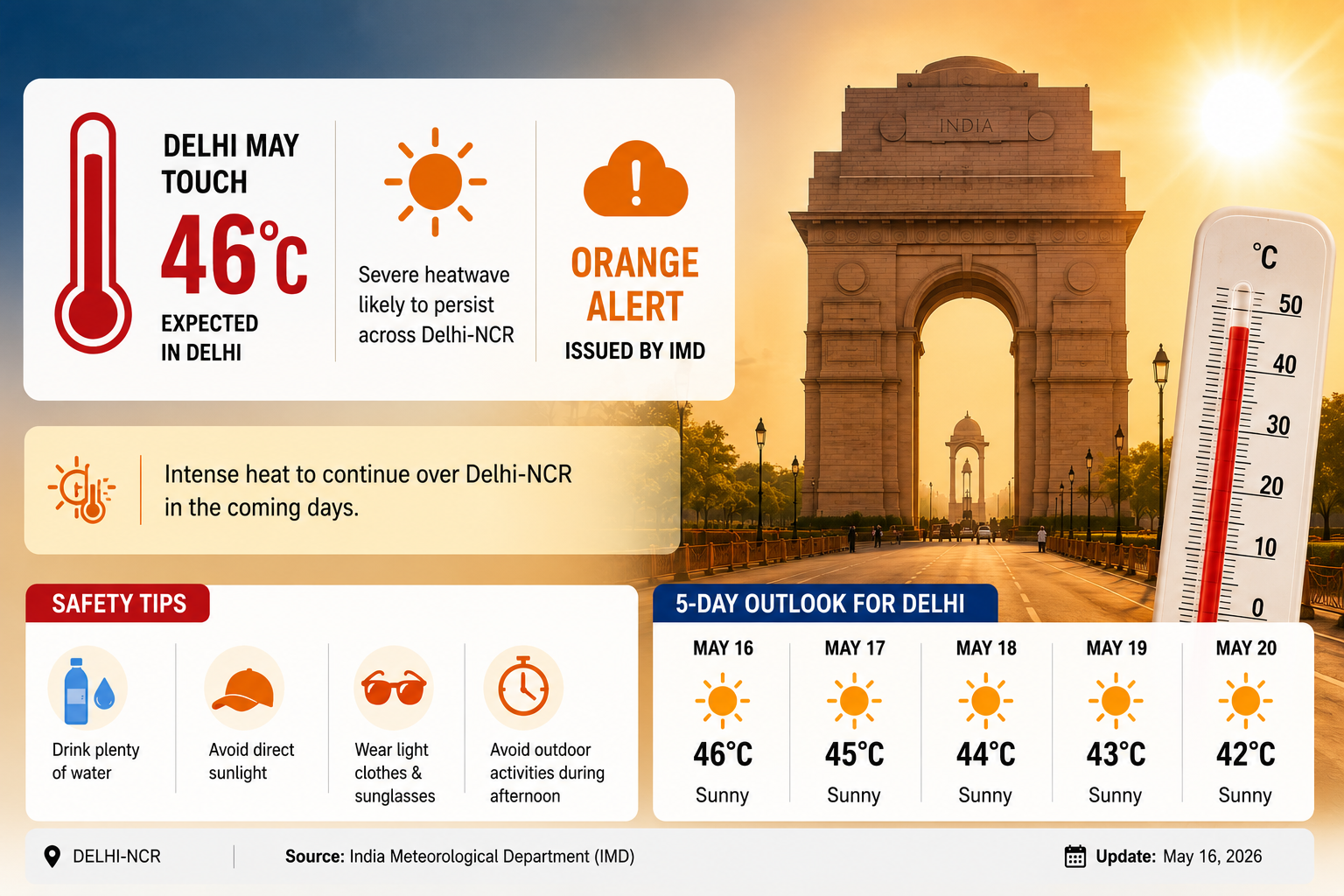
Delhi-NCR is bracing for intense heatwave conditions, with temperatures expected to climb as high as 46°C in parts of the national capital, prompting the India Meteorological Department (IMD) to issue an orange alert warning residents about severe heat stress and prolonged exposure risks. IMD’s latest Delhi forecast indicates heatwave to severe heatwave conditions across multiple parts of the city, with strong surface winds and mainly clear skies likely to worsen daytime discomfort.
What IMD Has Warned
According to the weather department, Delhi is likely to witness:
- Maximum temperatures between 44°C and 46°C
- Heatwave to severe heatwave conditions
- Mainly clear skies
- Strong hot winds during daytime
- Elevated night temperatures reducing heat relief
The orange alert indicates heightened health risks, particularly for vulnerable groups including children, elderly residents, and people with pre-existing medical conditions.
Delhi-NCR Areas Likely to Be Affected
Heatwave conditions are expected across:
- New Delhi
- South Delhi
- East Delhi
- West Delhi
- North West Delhi
- Noida
- Gurugram
- Ghaziabad
- Faridabad
IMD’s regional forecast suggests severe daytime stress across much of the NCR belt.
Why Temperatures Are Rising
Meteorological experts attribute the extreme heat to:
- Dry northwesterly winds
- Clear skies allowing direct solar heating
- Lack of rainfall activity
- Persistent hot air flow from northwestern regions
These conditions are intensifying daytime heating while limiting cooling relief.
Heatwave Safety Advisory
Residents are advised to:
- Avoid outdoor exposure between 12 PM and 4 PM
- Stay hydrated
- Wear light cotton clothing
- Use umbrellas or head coverings
- Avoid strenuous outdoor activity
- Monitor symptoms of heat exhaustion
Public Health Concerns Rise During Extreme Heat
Severe heatwave conditions can significantly increase the risk of heat-related illnesses, particularly among children, senior citizens, outdoor workers, and individuals with underlying health conditions. Medical experts often warn that prolonged exposure to extreme temperatures can lead to dehydration, heat exhaustion, heat cramps, dizziness, and in severe cases, heatstroke.
Authorities typically advise residents to remain indoors during peak afternoon hours unless travel is unavoidable.
Power and Water Demand May Surge
Extreme weather conditions often place additional pressure on urban infrastructure, especially electricity consumption and water demand. Air conditioner usage, cooling systems, refrigeration, and household electricity consumption generally rise sharply during intense heatwaves, increasing stress on power distribution systems.
Water demand may also rise as residents attempt to manage hydration and cooling needs across densely populated urban areas.
Travel and Daily Routine Disruptions Possible
Harsh daytime temperatures can disrupt daily commuting patterns, construction activity, delivery operations, and outdoor commercial work. Public transport users, traffic personnel, delivery workers, and labour-intensive sectors may be especially vulnerable to prolonged heat exposure. Businesses and institutions may also issue precautionary advisories depending on weather severity.
Relief May Depend on Weather Pattern Shift
Meteorologists will closely watch whether changing wind patterns, dust activity, or rainfall systems bring temporary relief in the coming days. Until then, Delhi-NCR residents may need to prepare for continued extreme daytime discomfort and elevated health precautions.
Key Insights
- Temperatures in Delhi are expected to soar up to 46°C, indicating an intense heatwave across the Delhi-NCR region.
- The India Meteorological Department has issued an Orange Alert, warning of severe heat conditions and heightened health risks.
- The alert signals the need for preparedness, with authorities advising precautions against heat-related illnesses such as dehydration and heatstroke.
- Prolonged high temperatures are likely to impact daily life, including outdoor work, power demand, and water consumption across the region.
- Vulnerable groups, including children, the elderly, and outdoor workers, are at greater risk amid extreme weather conditions.
- The heatwave reflects broader seasonal patterns but underscores increasing climate variability and the need for adaptive measures.
Image source: Unsplash
Also read: New Honda City Facelift: All Key Updates You Need to Know Before Launch
Add News Vent as a preferred source on Google – Click Here
Last Updated on: Wednesday, May 20, 2026 11:40 am by Koushik Velpuri | Published by: Koushik Velpuri on Wednesday, May 20, 2026 11:40 am | News Categories: India
About The Author