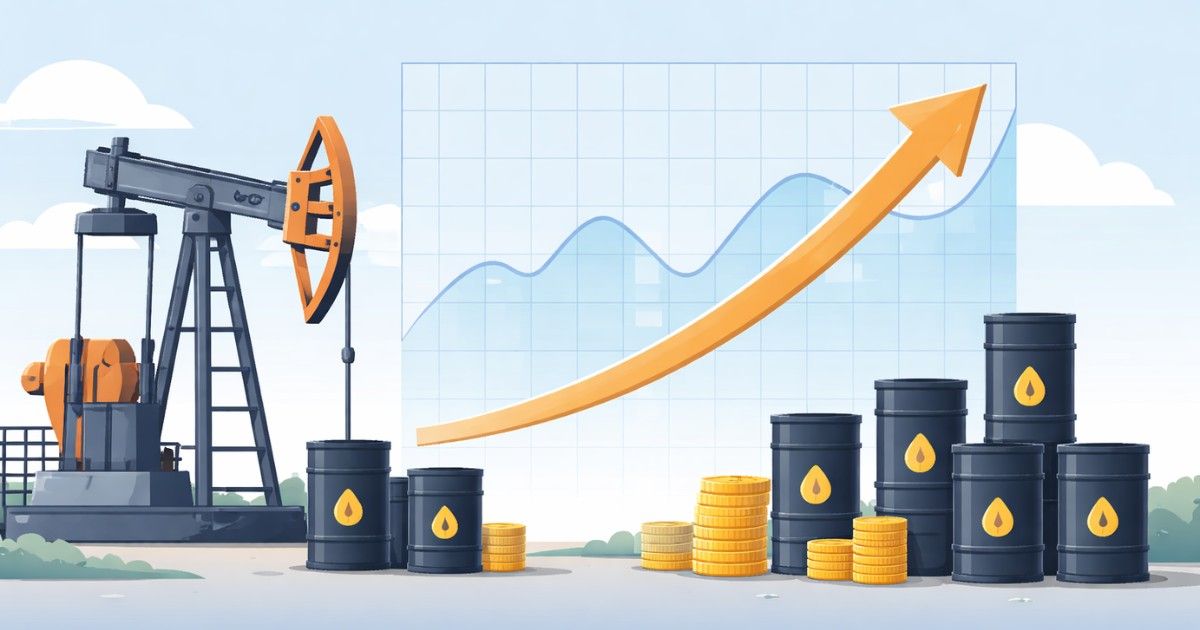
The global oil market in April 2026 is experiencing significant disruption, with crude prices surging above $100 per barrel amid escalating geopolitical tensions in the Middle East. Supply constraints, particularly around the Strait of Hormuz, have reshaped market expectations, forcing analysts to revise forecasts on both demand and production.
Price Trends: Oil crosses $100 amid volatility
Crude oil prices have climbed sharply in recent weeks:
- Brent crude trading around $100–$102 per barrel
- WTI crude also near $99–$104 per barrel
The surge reflects heightened risk premiums and supply concerns following disruptions in one of the world’s most critical oil transit routes.
Supply Shock: Strait of Hormuz disruption
A key driver of the current market is supply disruption linked to tensions involving Iran:
- Around 20% of global oil trade passes through the Strait of Hormuz
- Supply losses estimated at up to 10 million barrels per day
- Recovery expected to be slow even if tensions ease
The disruption has led to a sharp shift from earlier expectations of a supply surplus to a potential global deficit.
Demand Outlook: Growth slows, risk of decline
The International Energy Agency (IEA) has significantly revised its demand outlook:
- Earlier forecast: growth of ~640,000 barrels/day
- Revised outlook: decline of ~80,000 barrels/day in 2026
High prices are already impacting consumption, especially in emerging markets where fuel demand is more sensitive to cost increases.
Forecasts: Wide divergence among analysts
Oil price projections for 2026 now vary widely due to uncertainty:
- Short-term spike: $110–$120 per barrel possible
- Mid-year expectation: ~$90–$100 range
- Longer-term correction: $70–$80 by late 2026
This divergence reflects uncertainty over how long geopolitical tensions and supply disruptions will persist.
Market Balance: From surplus to deficit
Earlier in 2026, markets were expected to see a supply surplus due to rising production. However:
- Supply disruptions have reversed this outlook
- Inventories remain tight in OECD countries
- Demand destruction (reduced consumption due to high prices) may be required to rebalance markets
Impact on Global Economy
The oil market shock is having widespread economic effects:
- Rising inflation due to higher fuel costs
- Pressure on import-dependent countries like India
- Increased volatility in global financial markets
- Strain on oil marketing companies unable to pass on costs
Key Themes to Watch
- Developments in US–Iran relations
- Reopening or continued disruption of the Strait of Hormuz
- OPEC+ production decisions
- Global economic slowdown affecting demand
Conclusion
The April 2026 oil market report highlights a dramatic shift in global energy dynamics. What began as a relatively balanced market has turned into a volatile environment driven by geopolitical risk and supply uncertainty.
While prices may stabilise later in the year, the near-term outlook remains highly uncertain, with global markets closely watching developments in the Middle East and their ripple effects on energy supply and demand.
Also read: Ajay Banga, World Bank chief warns of looming global jobs crisis despite US–Iran war
Add News Vent as a preferred source on Google – Click Here
Last Updated on: Tuesday, April 14, 2026 3:27 pm by Koushik Velpuri | Published by: Koushik Velpuri on Tuesday, April 14, 2026 3:27 pm | News Categories: Business
About The Author