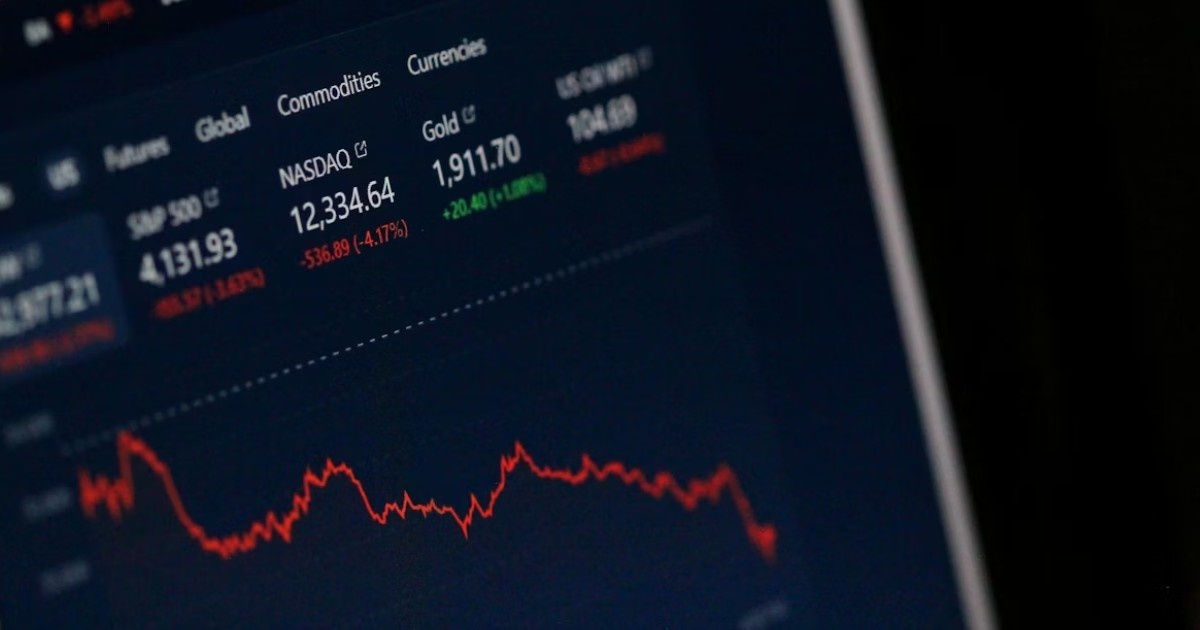
Indian benchmark indices witnessed a sharp sell-off, with the BSE Sensex tumbling nearly 1,000 points as heightened geopolitical uncertainty rattled investor sentiment. The sharp decline came after fresh global concerns emerged over ceasefire uncertainty, triggering broad-based risk aversion across financial markets.
The NSE Nifty 50 also traded sharply lower as investors moved away from risk-sensitive assets amid fears of prolonged geopolitical instability and rising commodity price pressure.
Global Geopolitical Concerns Trigger Sell-Off
Investor sentiment turned sharply negative after renewed uncertainty surrounding international ceasefire developments raised fears of escalating geopolitical tensions. Global markets often react strongly to such developments, particularly when they carry implications for energy prices, trade flows, and broader economic stability.
Sensex and Nifty Under Heavy Pressure
Benchmark indices came under intense selling pressure, with large-cap stocks dragging the market lower. The sharp fall reflects heightened caution among both institutional and retail investors as uncertainty intensified.
The Nifty’s decline alongside the Sensex highlights broad-based weakness across sectors.
Why Markets Are Falling Today
Several factors appear to be driving the sell-off:
- Rising geopolitical uncertainty
- Global risk aversion
- Crude oil price concerns
- Foreign institutional investor caution
- Profit booking in large-cap stocks
- Weak international market cues
Banking and Large-Cap Stocks Drag Indices
Heavyweight banking, financial, and industrial stocks often bear the brunt during sharp market corrections due to their strong influence on benchmark indices.
Analysts say institutional selling in blue-chip counters likely amplified the decline.
Oil Price Concerns Add Pressure
Geopolitical tensions often raise fears of supply disruption in global energy markets, pushing crude oil prices higher. For India, higher oil prices can negatively impact inflation, currency stability, and corporate profitability.
Safe-Haven Shift Impacts Emerging Markets
During periods of uncertainty, investors frequently move capital toward safer global assets such as the US dollar, government bonds, and gold, reducing appetite for emerging market equities.
This shift can intensify pressure on Indian stocks and the rupee.
Foreign Investor Sentiment Remains a Major Market Driver
Foreign institutional investor activity is expected to remain a crucial factor influencing short-term market direction. During periods of heightened global uncertainty, overseas investors often reduce exposure to emerging markets and shift capital toward safer assets.
Sustained foreign selling can place additional pressure on large-cap stocks, particularly in banking, financial services, and technology sectors that carry heavy benchmark weightage.
Volatility May Continue Across Sectors
Sharp market corrections often lead to increased volatility across multiple sectors as investors reassess risk exposure. Rate-sensitive sectors, export-driven companies, commodity-linked stocks, and high-beta counters may remain particularly vulnerable to rapid sentiment shifts.
Defensive sectors such as pharmaceuticals and utilities may witness selective interest during uncertain conditions.
Crude Oil and Currency Movement in Focus
Market participants are also closely monitoring crude oil prices and rupee movement, as both can significantly influence corporate profitability and inflation expectations. Rising oil prices combined with currency weakness could create broader macroeconomic concerns for the Indian economy.
Traders Watch for Stabilisation Signals
Technical analysts say investors will be watching closely for signs of stabilisation near important support levels. Any improvement in global sentiment or easing geopolitical concerns could help reduce selling pressure in upcoming sessions.
Investors Watch Global Developments Closely
Market participants are closely tracking:
- Geopolitical updates
- Crude oil movement
- Foreign institutional investor activity
- Currency market trends
- Global equity sentiment
- Central bank policy expectations
Outlook
Analysts expect elevated volatility in the near term as geopolitical uncertainty remains unresolved. Any easing in global tensions could support market recovery, while further escalation may continue weighing on investor confidence.
Image source: Unsplash
Also read: Dixon Tech in Focus: Q4 Results Date, Dividend Expectations, Earnings Call & Stock Performance
Add News Vent as a preferred source on Google – Click Here
Last Updated on: Tuesday, May 12, 2026 2:31 pm by Koushik Velpuri | Published by: Koushik Velpuri on Tuesday, May 12, 2026 2:31 pm | News Categories: Business
About The Author